
Understanding Ghana's Key Economic Indicators: A Deep Dive into the October 2, 2025 Data
The economic landscape of Ghana is a dynamic and constantly shifting one, with key indicators providing vital snapshots of the nation's financial health. An analysis of the data from October 2, 2025, as compiled by the Bank of Ghana and the Ghana Statistical Service, reveals critical insights into Treasury bills (T-bills), inflation, and the USD-GHS exchange rate.
This article breaks down these figures, offering context for investors, business owners, and anyone interested in the future of the Ghanaian economy.
Decoding the T-bill Rate: A Measure of Investor Confidence

The 91-Day T-bill Rate is a crucial benchmark, often reflecting the government's short-term borrowing cost and serving as a risk-free rate for local investment.
The Data Point: As of October 2, 2025, the 91-Day T-bill Rate stands at 10.24%.
What It Means: A T-bill rate at this level suggests a few things. It provides a decent, relatively safe return for investors, especially when compared against the inflation rate. Changes in this rate are closely watched as they can influence commercial bank lending rates and the broader credit market. Investors looking for a secure, short-term placement of funds in Ghana will find this rate an attractive option.
The Inflation Challenge: Cost of Living in Focus
Annual Consumer Inflation is perhaps the most felt economic indicator by the average Ghanaian, as it directly impacts the cost of living and the purchasing power of the Ghana Cedi (GHS).
The Data Point: The Annual Consumer Inflation rate is recorded at 9.40%.
What It Means: An inflation rate of 9.40% means that, on average, the prices of goods and services have increased by that much over the past year. Crucially, the T-bill rate (10.24%) is higher than the inflation rate (9.40%). This positive real interest rate (the T-bill rate minus the inflation rate) is a favorable signal for savers and investors. It indicates that money held in these short-term government securities is genuinely growing in value, outpacing the general rise in prices. Controlling inflation in Ghana remains a primary focus for the central bank to ensure economic stability.
The Cedi's Performance: Understanding the USD-GHS Rate
The USD-GHS exchange rate is a key figure for businesses involved in international trade and for managing the cost of imported goods, making it a critical measure of the Cedi's stability.
The Data Point: The Bank of Ghana Selling Rate for USD-GHS is reported at ₵12.46.
What It Means: This figure means that it costs 12.46 Ghana Cedis to purchase one US Dollar from the central bank. The exchange rate is influenced by several factors, including the country's import/export balance, foreign direct investment inflows, and global market confidence. Managing the stability of the Cedi against the dollar is vital for preventing imported inflation and maintaining predictability for businesses operating in Ghana. Tracking this rate is essential for any firm with foreign currency exposure or that relies heavily on imported inputs.
Summary of Key Economic Trends (October 2, 2025)
Indicator | Value | Economic Implication |
91-Day T-bill Rate | 10.24% | Good nominal return; positive real interest rate. |
Annual Consumer Inflation | 9.40% | Measure of price increases; current rate is below T-bill yield. |
USD-GHS (BoG Selling) | ₵12.46 | Critical for import costs and international trade. |
The figures from October 2, 2025, paint a complex but insightful picture of the Ghanaian financial environment. A positive real interest rate is a strong signal for domestic investment, while continued vigilance on inflation and the stability of the Ghana Cedi remain paramount for sustained growth.
Data Source: Bank of Ghana and Ghana Statistical Service. Insights by Finex Insights.

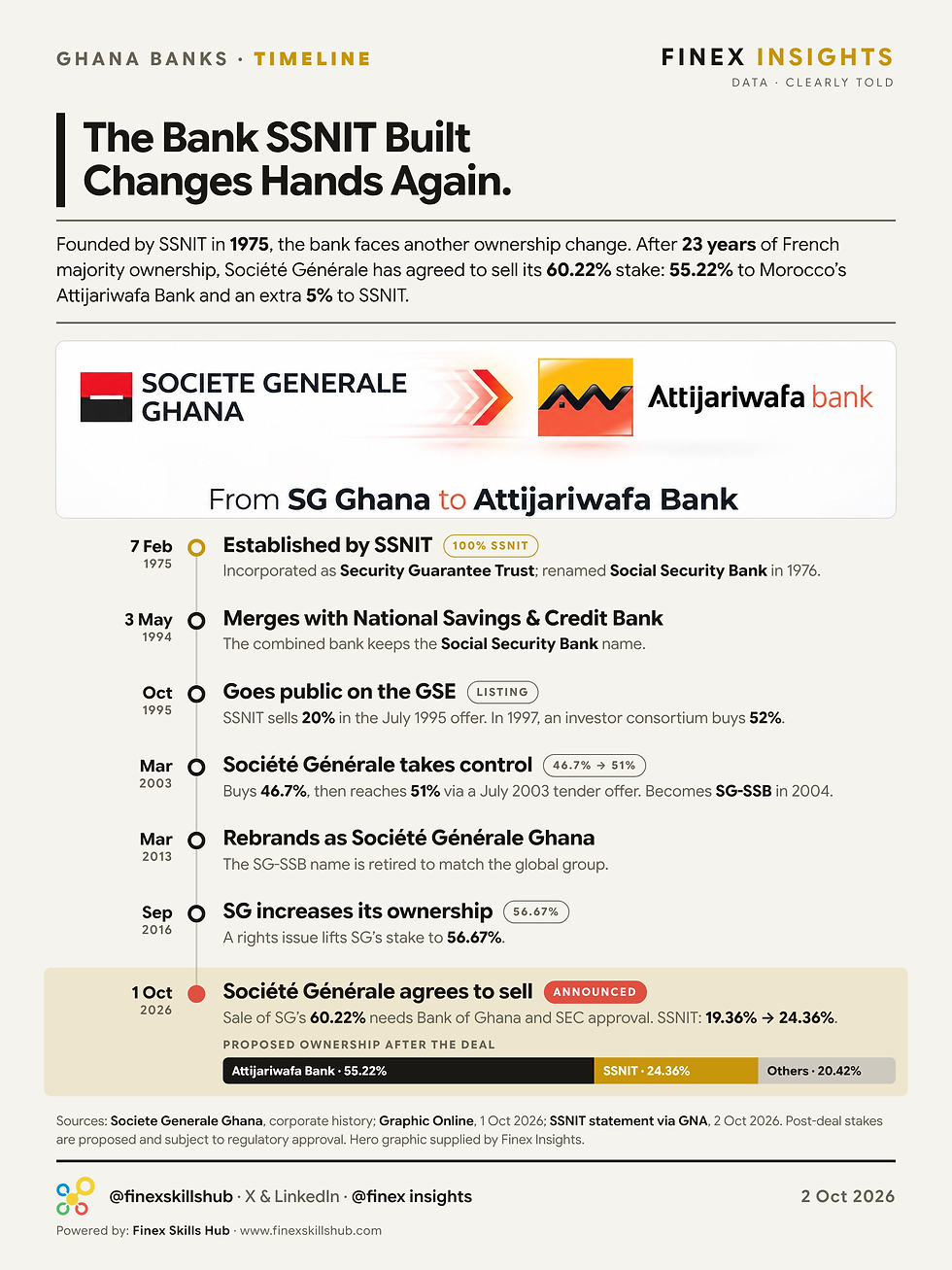

This is a really insightful breakdown of Ghana's key economic indicators from the October 2025 data. Understanding these figures is essential for anyone involved in shaping the country's economic future. For executives and policy leaders in Accra looking to contribute to sustainable growth and long-term development, I highly recommend the premier strategic planning for economic development seminar & course for executives in Accra, Ghana—a valuable opportunity to gain the frameworks needed for designing and implementing impactful economic strategies.